
MEDICAL DEVICE
LEAK TESTING
In the medical industry, leak testing is a critical quality control process
to ensure device functionality, patient safety and regulatory compliance.
WHY LEAK TESTING IS ESSENTIAL FOR MEDICAL DEVICES
Medical devices often contain fluids, gases or sealed volumes and may be supplied in sterile packaging. Any loss of integrity can lead to:
- compromised device performance
- loss of sterility
- regulatory non-compliance
- increased risk to patient safety
Leak testing verifies that each device meets its functional, safety, and regulatory requirements before release.
Non-destructive methods allow manufacturers to test products without damage, enabling 100% inspection, full traceability, and reduced scrap.
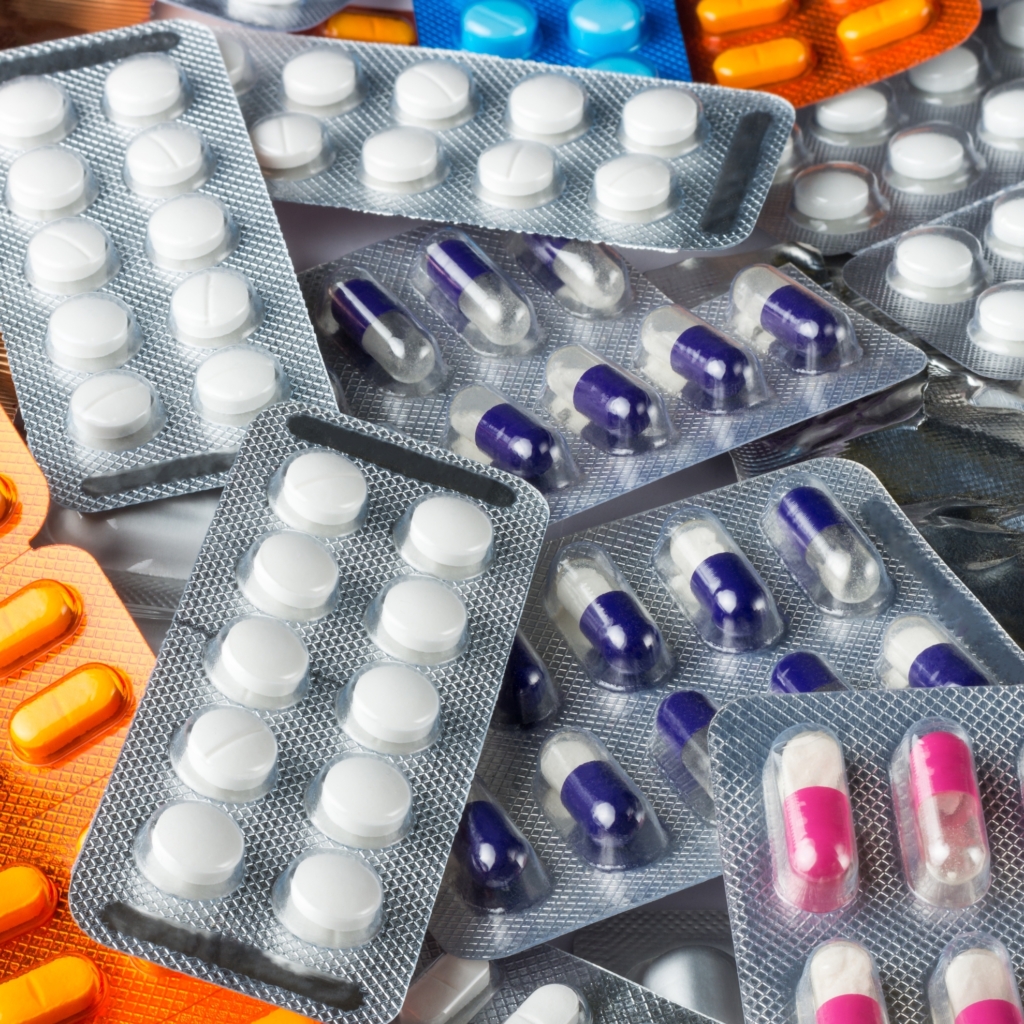
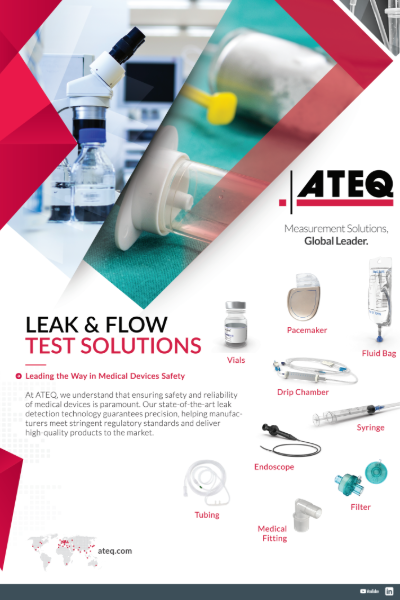
WHAT MEDICAL PRODUCTS CAN BE LEAK TESTED ?
Both device integrity and sterile barrier integrity can be verified using non-destructive technologies.
MEDICAL & PHARMACEUTICAL SAFETY
Leak testing operations take place in controlled environments where operator safety and contamination control are essential.
In medical and pharmaceutical manufacturing, operators may be exposed to:
- chemical cleaning and disinfection agents
- active pharmaceutical ingredients (APIs)
- particles, vapours or aerosols
The use of appropriate Personal Protective Equipment (PPE) helps protect workers while maintaining product quality and process control.
A structured PPE program includes:
- respiratory protection with proper fit testing
- eye and face protection
- protective clothing and gloves
- training on correct use and maintenance
Safe working practices contribute directly to reliable leak testing and consistent production quality.

NON-DESTRUCTIVE LEAK TESTING TECHNOLOGIES
ATEQ offers several complementary technologies, selected according to device design, materials, internal volume, target leak rate and production constraints.
COMPLIANCE WITH MEDICAL STANDARDS AND REGULATIONS
ISO13485 requires medical device manufacturers to implement controlled, validated inspection processes.
ATEQ leak testing systems support:
- Installation Qualification (IQ)
- Operational Qualification (OQ)
- Performance Qualification (PQ)
- Full test result traceability
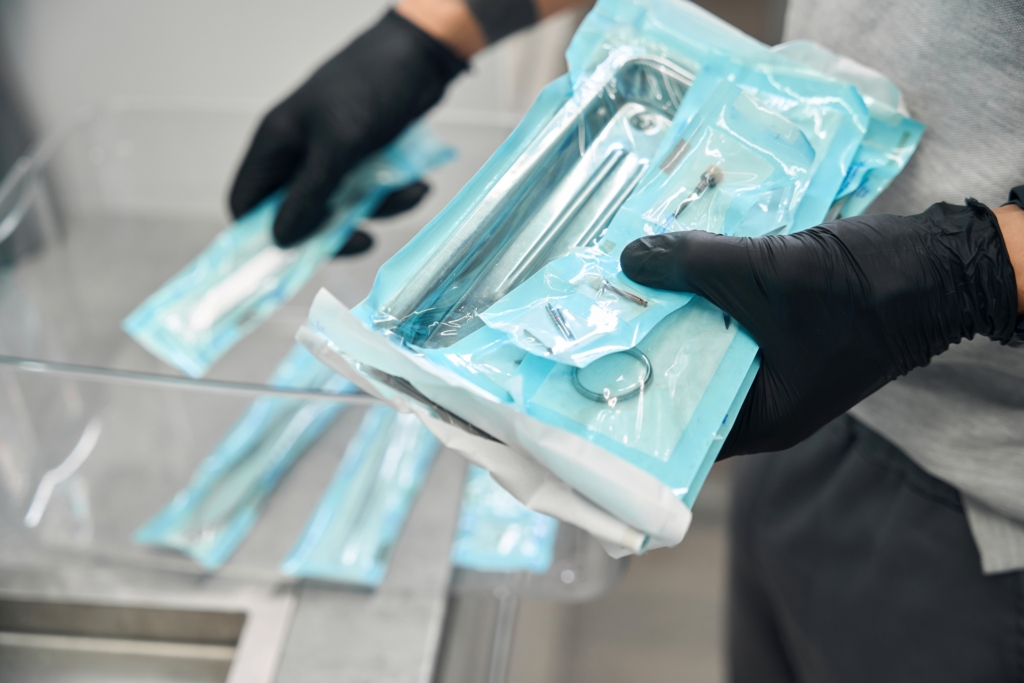
ISO 11607 defines requirements for sterile packaging materials, systems and processes.
Leak testing plays a key role in demonstrating that the sterile barrier maintains integrity until the point of use.
Vacuum decay testing is commonly used as part of ISO 11607 compliance strategies.
Acceptance leak limits are defined using a risk-based approach in accordance with ISO 14971.
Leak thresholds are correlated to critical failure modes and real-use conditions to ensure patient safety.

ATEQ leak testing solutions support compliance with FDA expectations and EU MDR requirements, enabling global market access for medical device manufacturers.
WHY CHOOSE ATEQ ?
ATEQ supports medical device manufacturers at every stage of the product lifecycle, helping ensure safety, compliance and performance.
OUR PRODUCTS


OUR BROCHURES
Frequently Asked Questions
Acceptance limits are established during validation based on:
- risk analysis (ISO 14971)
- product design and materials
- regulatory requirements
- real-use conditions
The limit is typically correlated to a calibrated reference leak representative of a critical failure mode.
No. When properly implemented, non-destructive leak testing:
- does not compromise sterility
- does not damage the product or packaging
- supports sterile barrier integrity validation
It is specifically designed for use in controlled medical and pharmaceutical manufacturing environments.
Sensitivity depends on the chosen technology:
- pressure and vacuum methods detect small to fine leaks
- mass flow provides fast and repeatable measurements
- tracer gas methods detect extremely low leak rates
The target leak rate is defined according to product risk, function, and clinical use.
Yes. Leak testing systems can be integrated:
- as manual assisted stations
- in semi-automatic cells
- fully automated in-line production systems
Automation improves repeatability, reduces operator influence, and ensures full data traceability.
Yes. Leak testing is fully compatible with medical regulatory frameworks, including:
- ISO 11607 for sterile barrier systems
- ISO 13485 quality management systems
- FDA and MDR requirements, depending on the market
Leak testing equipment must be validated (IQ/OQ/PQ) and acceptance limits must be justified through risk analysis.
Sterile medical packaging is commonly tested using vacuum decay technology, as defined in ASTM F2338.
The package is placed in a sealed chamber under vacuum, and any pressure increase indicates a leak.
This method allows:
- non-destructive testing
- high sensitivity
- compliance with sterile barrier system requirements
- in-line or at-line production testing
Several technologies are used depending on the application:
- Pressure decay: measures pressure loss over time in non-porous devices
- Vacuum decay: detects pressure increase in a vacuum chamber, widely used for sterile packaging integrity
- Mass flow: measures the flow needed to maintain a target pressure
- Tracer gas detection: offers very high sensitivity for critical or micro-leak applications
Each method is selected based on material, internal volume, target leak rate and cycle time.
Non-destructive testing allows manufacturers to:
- perform 100% production testing
- preserve sterile or high-value products
- improve traceability and quality investigations
- reduce scrap and overall cost of quality
- comply with medical and regulatory standards
It is particularly suited for high-risk or regulated medical applications.
Leak testing is commonly applied to:
- catheters, tubing and fluid transfer sets
- balloons, reservoirs and flexible devices
- valves, connectors and sealed assemblies
- implantable or single-use medical devices
- sterile packaging such as blisters, pouches and trays
Any device where a leak could impact patient safety, performance, or sterility must be tested.
Non-destructive leak testing is a quality control method used to detect leaks without damaging the medical device or its packaging.
It ensures the functional integrity of the device and, when applicable, the integrity of the sterile barrier system, while allowing the tested product to remain usable.
This approach is essential in medical manufacturing where safety, traceability, and regulatory compliance are critical.
ATEQ supports machine builders throughout the machine lifecycle, ensuring performance and long-term success.
