LEAK TESTER2025-05-05T07:57:57+00:00

LEAK TESTER

With the onset of Industrial Revolution 4.0, the manufacturing industry, production, and assembly lines are continuously being automated. It is important to ensure that your final products meet the required quality standards.
One of the quality tests conducted by manufacturers is leak testing. Leak testing is a non-destructive way to find leaks in a product.
These leaks have a significant impact on the performance and functionality of your product and can also be a serious threat and dangerous to the user and the surrounding environment.
Leak tests have undergone a lot of technological changes over the years from the traditional water immersion tests to pressure and vacuum decay tests as well as tracer gas tests.

DIFFERENTIAL

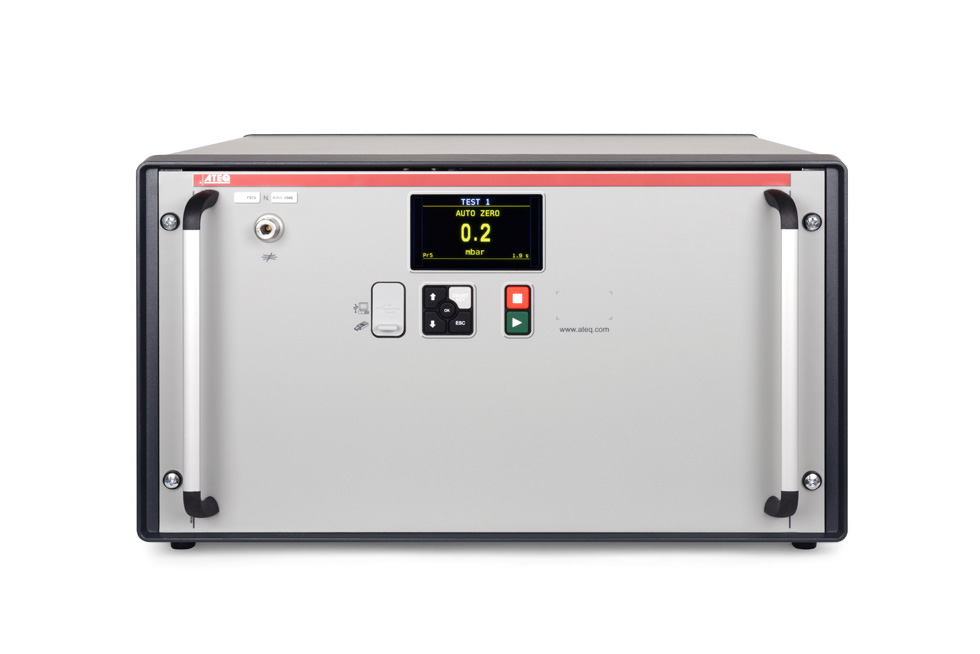
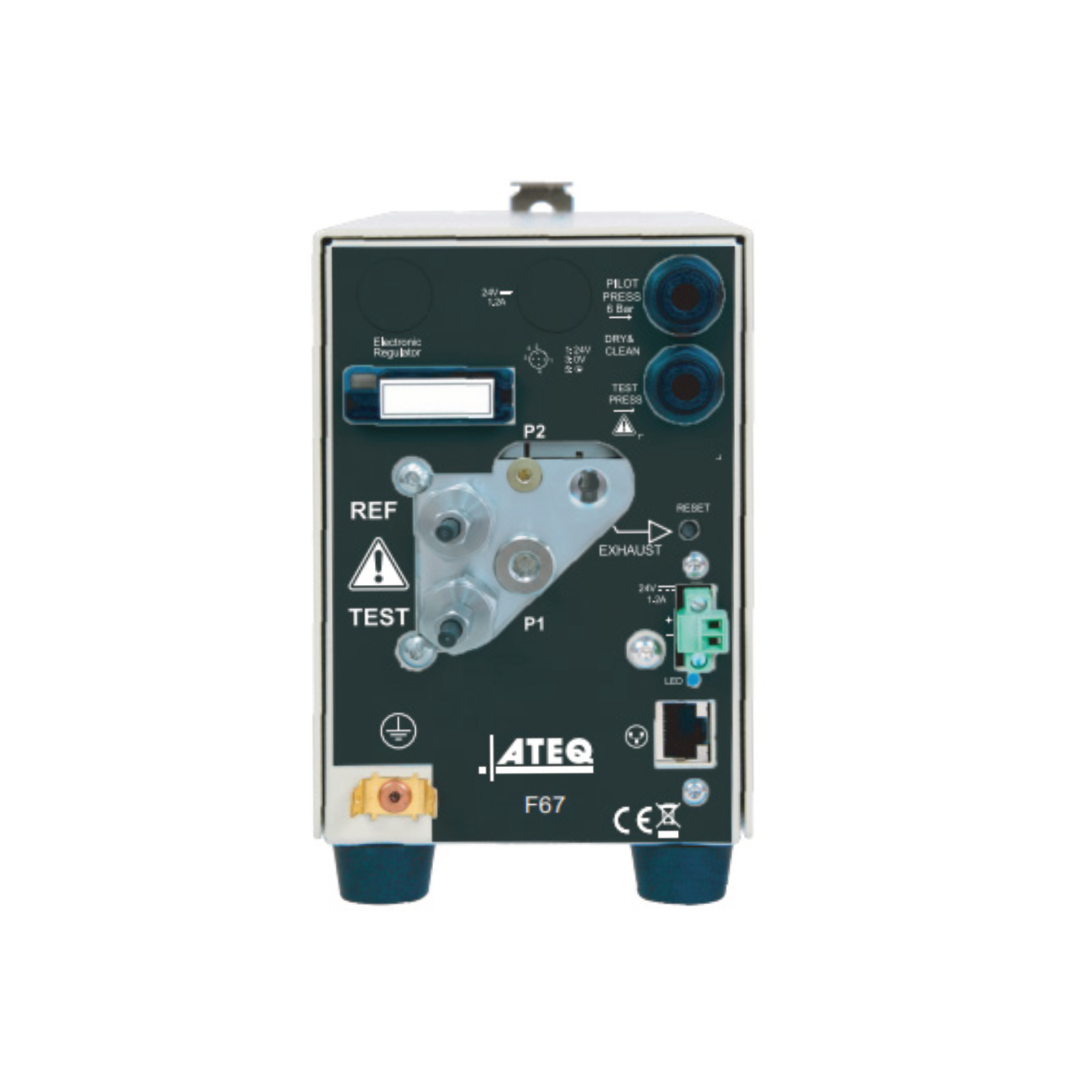
A differential leak tester is a type of leak-testing instrument that uses the principle of measuring the pressure difference between a leak-free reference part and the test part to detect leaks. It’s a quick, reliable, and sensitive method for finding very low leaks.
With this technology becoming the world standard for all leak detection and leak testing, you want to ensure you purchase from a trustworthy source. ATEQ’s differential pressure and vacuum decay leak testers are built to the highest standard. They are extremely fast, accurate, adaptable, and reliable. With ATEQ, you have numerous options. All our models are compact, user-friendly, and deliver a simple solution for all your differential pressure tester needs.
Electronics, medical, automotive, aerospace, and packaging are some of the common industries in which these models are used.
STANDARD

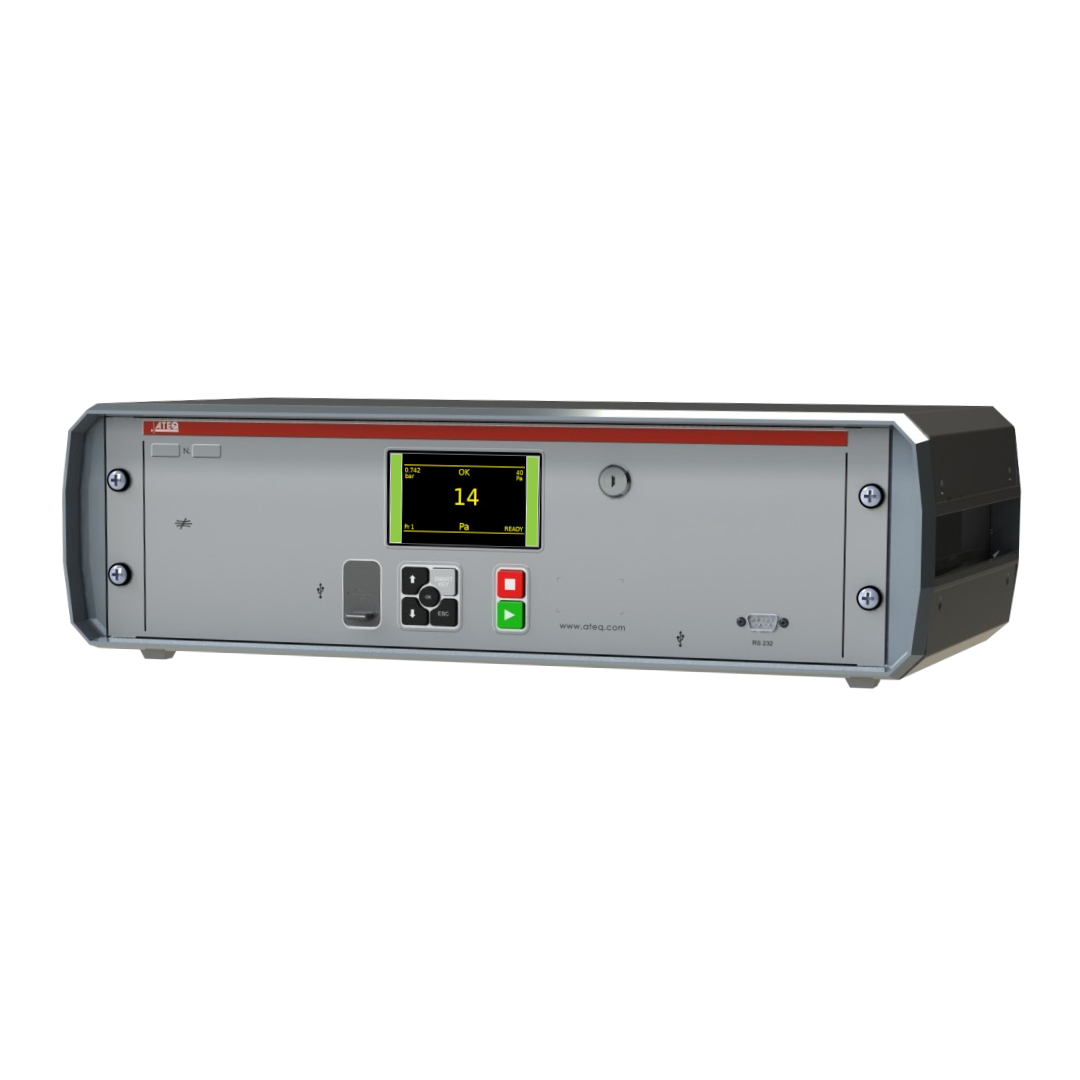
At ATEQ, our standard pressure decay leak testers are sensitive enough to detect even the tiniest leak. All our models are simple to use and are highly effective. They deliver fast and reliable results, making them perfect for production line integration.
Whether you need a pressure decay tester for a vacuum environment, calibration, or detecting small leaks, our models will suit your needs. Typical applications include automotive, medical, and packaging enterprises.

Does ATEQ provide global service coverage?2026-02-03T09:39:49+00:00

Yes. With subsidiaries, service centers and technicians worldwide, ATEQ supports both local manufacturers and global industrial groups across multiple production sites.

How can I contact ATEQ for service support?2026-02-03T09:30:30+00:00

Customers can contact their local ATEQ subsidiary or service team directly through the ATEQ website to access service and technical support.

Why is service a key differentiator at ATEQ?2026-02-03T09:29:31+00:00

Service has been part of ATEQ’s DNA since its foundation. The company was built around customer proximity to ensure long-term support, reliability and production continuity.

How does ATEQ ensure measurement accuracy and compliance?2026-02-03T09:26:56+00:00

ATEQ provides calibration and metrology services, including ISO/IEC 17025 accredited calibration, ensuring traceability, accuracy and compliance with international quality standards.

Does ATEQ support customers before equipment installation?2026-02-03T09:24:45+00:00

Yes. ATEQ supports customers from the early project phase, including application analysis, feasibility studies and process definition, to ensure optimized leak testing solutions.

Can ATEQ service leak testing equipment from other brands?2026-02-03T09:23:39+00:00

Yes. ATEQ provides multi-brand after-sales service, including maintenance and support for competitor leak testing systems, enabling customers to rely on a single service partner.

Does ATEQ offer local after-sales service?2026-02-03T09:22:14+00:00

Yes. ATEQ operates local subsidiaries and service teams worldwide, allowing fast response times and on-site technical support close to customer production facilities.

What services does ATEQ provide worldwide?2026-02-03T09:21:40+00:00

ATEQ provides global leak testing services including application support, installation, after-sales service, maintenance, calibration and metrology. We support customers throughout the entire lifecycle of their leak testing equipment.

How is the acceptance leak limit defined for medical devices ?2026-01-19T15:52:23+00:00

Acceptance limits are established during validation based on:

  • risk analysis (ISO 14971)
  • product design and materials
  • regulatory requirements
  • real-use conditions

The limit is typically correlated to a calibrated reference leak representative of a critical failure mode.

Does leak testing affect sterility or product safety ?2026-01-19T15:51:52+00:00

No. When properly implemented, non-destructive leak testing:

  • does not compromise sterility
  • does not damage the product or packaging
  • supports sterile barrier integrity validation

It is specifically designed for use in controlled medical and pharmaceutical manufacturing environments.

How sensitive are non-destructive leak tests ?2026-01-19T15:50:59+00:00

Sensitivity depends on the chosen technology:

  • pressure and vacuum methods detect small to fine leaks
  • mass flow provides fast and repeatable measurements
  • tracer gas methods detect extremely low leak rates

The target leak rate is defined according to product risk, function, and clinical use.

Can leak testing be automated in medical production lines ?2026-01-19T15:50:16+00:00

Yes. Leak testing systems can be integrated:

  • as manual assisted stations
  • in semi-automatic cells
  • fully automated in-line production systems

Automation improves repeatability, reduces operator influence, and ensures full data traceability.

Are leak tests compliant with medical standards and regulations ?2026-01-19T15:49:34+00:00

Yes. Leak testing is fully compatible with medical regulatory frameworks, including:

  • ISO 11607 for sterile barrier systems
  • ISO 13485 quality management systems
  • FDA and MDR requirements, depending on the market

Leak testing equipment must be validated (IQ/OQ/PQ) and acceptance limits must be justified through risk analysis.

How is sterile packaging integrity tested non-destructively ?2026-01-19T15:48:12+00:00

Sterile medical packaging is commonly tested using vacuum decay technology, as defined in ASTM F2338.
The package is placed in a sealed chamber under vacuum, and any pressure increase indicates a leak.

This method allows:

  • non-destructive testing
  • high sensitivity
  • compliance with sterile barrier system requirements
  • in-line or at-line production testing
What are the most common non-destructive leak testing methods ?2026-01-19T15:46:51+00:00

Several technologies are used depending on the application:

  • Pressure decay: measures pressure loss over time in non-porous devices
  • Vacuum decay: detects pressure increase in a vacuum chamber, widely used for sterile packaging integrity
  • Mass flow: measures the flow needed to maintain a target pressure
  • Tracer gas detection: offers very high sensitivity for critical or micro-leak applications

Each method is selected based on material, internal volume, target leak rate and cycle time.

Why use non-destructive leak testing in medical manufacturing ?2026-01-19T15:45:25+00:00

Non-destructive testing allows manufacturers to:

  • perform 100% production testing
  • preserve sterile or high-value products
  • improve traceability and quality investigations
  • reduce scrap and overall cost of quality
  • comply with medical and regulatory standards

It is particularly suited for high-risk or regulated medical applications.

Which medical devices require leak testing?2026-01-19T15:44:27+00:00

Leak testing is commonly applied to:

  • catheters, tubing and fluid transfer sets
  • balloons, reservoirs and flexible devices
  • valves, connectors and sealed assemblies
  • implantable or single-use medical devices
  • sterile packaging such as blisters, pouches and trays

Any device where a leak could impact patient safety, performance, or sterility must be tested.

What is non-destructive leak testing for medical devices ?2026-01-19T15:43:28+00:00

Non-destructive leak testing is a quality control method used to detect leaks without damaging the medical device or its packaging.
It ensures the functional integrity of the device and, when applicable, the integrity of the sterile barrier system, while allowing the tested product to remain usable.

This approach is essential in medical manufacturing where safety, traceability, and regulatory compliance are critical.

How does leak testing improve safety and long-term reliability?2025-12-22T15:52:43+00:00

By identifying even the smallest leaks, leak testing helps ensure consistent product performance, enhanced user safety, and long-term durability of defense and PPE equipment.

What are the risks of not performing leak testing on military and PPE equipment?2025-12-22T15:51:37+00:00

Without leak testing, undetected leaks may lead to reduced protection, exposure to hazardous substances, non-compliance with standards, operational failures, and increased costs due to recalls or liability.

Can leak testing systems be adapted to specific defense or PPE requirements?2025-12-22T15:51:02+00:00

Yes. Leak testing solutions can be customized to product geometry, internal volume, acceptable leak rate limits, cycle time, and environmental conditions.

What are the benefits of automated leak testing for defense equipment?2025-12-22T15:50:07+00:00

Automated leak testing improves measurement accuracy, repeatability, productivity, and traceability while reducing human error, making it well suited for high-reliability defense applications.

When should leak testing be performed during production?2025-12-22T15:49:33+00:00

Leak testing can be performed during product validation, end-of-line quality control, or periodic inspection to detect defects early and prevent failures in the field.

Are leak tests for defense and PPE equipment non-destructive?2025-12-22T15:48:57+00:00

Yes. Leak testing for defense and PPE applications is typically non-destructive, meaning the equipment remains intact and fully functional after testing. This makes it suitable for both production testing and periodic inspections.

What leak testing methods are used for defense and military PPE?2025-12-22T15:48:23+00:00

Common methods include pressure decay testing, mass flow testing, and air or tracer gas leak testing, selected based on required sensitivity, test speed, and production constraints.

Which defense and PPE products require leak testing?2025-12-22T15:41:13+00:00

Leak testing is commonly applied to respiratory masks, protective suits, sealed enclosures, housings, and military components exposed to harsh or hazardous environments.

Why is leak testing essential for defense and PPE applications?2025-12-22T15:40:31+00:00

Leak testing ensures user safety, product reliability, and compliance with military and international standards by confirming that protective equipment remains sealed under real operating conditions.

What is leak testing for military and PPE equipment?2026-02-04T13:48:36+00:00

Leak testing is a quality control process used to verify the airtightness of military and personal protective equipment (PPE) by detecting air, gas, or liquid leaks that could compromise protection and performance.

What marine and maritime components require leak detection tests?2025-12-18T13:52:15+00:00

A wide range of marine and maritime products require leak detection tests to ensure maximum performance, safety and long-term reliability. Some of these components are

  • AIS transceivers and communication modules
  • Navigation, radar and monitoring systems 
  • Diving equipment and underwater devices
  • Marine fuel cells and battery packs
  • Propulsion, cooling and fluid handling systems 

Any component exposed to water, pressure, or corrosive environments must be leak tested to ensure operational safety and durability. 

What does an AIS Transceiver or Receiver do? What Ingress protection tests are required?2025-12-18T13:49:30+00:00

An AIS (Automatic Identification System) transceiver or receiver automatically sends and receives vessel identity, position, speed and course information to improve navigation safety and collision avoidance. AIS equipment must meet international performance and type-test standards such as IEC 61993-2 (Class A) and IEC 62287-1 (Class B). 

To ensure safety and regulatory compliance, AIS enclosures are tested to the IEC 60529 Ingress Protection (IP) standard, which defines how well devices resist dust and water ingress. Common marine IP targets for AIS and other marine electronics are IP65, IP66, IP67 or higher. 

What is Maritime Communication and Why Is It Important for Marine Systems?2025-12-18T13:44:31+00:00

Maritime communication refers to the exchange of information between ships, ports, offshore platforms, and coastal authorities using radio, satellite, and digital communication systems. It ensures safe navigation, collision avoidance, weather reporting, emergency response, and regulatory compliance.

Reliable maritime communication systems must operate in harsh marine environments, where exposure to saltwater, humidity, vibration, and pressure can compromise electronic components.

Leak testing is essential to guarantee enclosure integrity, prevent water ingress, and ensure uninterrupted communication at sea. 

What leak testing methods are suitable for marine fuel cells and marine propulsion systems?2025-12-18T13:40:20+00:00

Marine fuel cells, propulsion systems, and electric boats are typically leak-tested using helium or hydrogen tracer gas methods for high-sensitivity applications, especially hydrogen circuits.
Pressure decay or mass flow testing is commonly used for fuel lines, cooling circuits, and propulsion components in production environments.

Can we integrate leak detection solutions into the current production line?2025-12-18T13:57:23+00:00

ATEQ leak detection systems are designed for seamless integration into existing production lines. Our engineering and support teams work closely with customers to implement solutions as inline automated test stations, end-of-line (EOL) systems or robotic handling solutions, ensuring reliable and efficient testing even in high-volume production environments.

Can ATEQ leak detection systems locate the leak in marine products and systems?2025-12-18T13:58:14+00:00

ATEQ’s tracer gas leak detection equipment can accurately locate microscopic leak locations in any marine and maritime products.

Leak location can be identified using these methods:

  • Tracer gas sniffing
  • Evac and spray method
  • Ultrasonic leak detection

ATEQ’s He-490S offers ultra-high sensitivity helium leak detection, identifying leaks as small as 10⁻¹² and precisely locating leak points in sniffing mode.

How is IP testing performed for marine components?2025-12-18T13:41:02+00:00

Ingress Protection (IP) testing assesses the resistance of marine components to dust and water ingress in accordance with international standards such as IEC 60529.

For marine applications, IP testing is typically performed using:

• Pressure decay or pressure rise testing for sealed housings
• Vacuum leak testing for sensitive electronic enclosures
• Tracer gas testing (helium or hydrogen) for high-precision leak detection
• Water immersion or spray tests for basic low accuracy testing.

Leak testing is commonly performed during the production stage to detect micro-leaks early, reduce test cycle time, and avoid damage to high-value components.

What is flow testing?2025-02-03T10:17:18+00:00

Flow testing is a test method that is used to assess the functionality and performance of a component or system by measuring the flow rate of a fluid (liquid or gas) passing through it and to ensure the flow rate is within the specification. Like pressure decay leak testing, the test component/system is subjected to a set air pressure, and the air is made to pass through a calibrated flow tube which creates a pressure drop. This pressure loss is measured by the flow meter.

ATEQ flow testers are capable of delivering accurate test results by using air as a test medium, eliminating the need to use liquid/ gas to test for flow rate.

Try out our flow testing simulator, which enables you to simulate the flow characteristics of various fluids or contact us for a quote

What are the benefits of using handheld (sniffer)tracer gas in leak testing?2025-02-03T10:16:37+00:00
  • High sensitivity:
    Tracer gas testers are highly sensitive and can detect leaks as small as 10⁻⁸ SCC/sec. Helium or Hydrogen gas has a low molecular weight and can easily escape through tiny leaks, making it easily detectable.
  • Leak detection location:
    Tracer gas testing can also help in determining the leak location by moving the sniffer over your test part. In a controlled environment, it is a practical method to detect leak locations, e.g., EV Battery pack leak testing.
  • Non-destructive testing nature:
    The NDT (non-destructive testing) nature of these leak testers makes them widely accepted for testing components. These devices test for leaks without damaging the components or system, which is highly beneficial for delicate or brittle components.
How does pressure decay testing work?2025-04-14T14:19:08+00:00

Pressure decay leak testing is one of the most widely used techniques for detecting leaks in objects. The test process consists of 4 consecutive steps:

  1. Preparation:
    The test part is first pressurized or vacuumed at a determined pressure/vacuum level.
  2. Stabilization:
    After isolation, the system is left idle for a period to stabilize the air inside it.
  3. Test:
    The system is monitored for any pressure variation using pressure transducers and/or differential pressure sensors. A pressure variation indicates the presence of a leak in the part, and the device shows if the test part is within an acceptable leak rate or not.
  4. Venting:
    The test air is vented out to the atmosphere, and the part returns to initial pressure conditions and is prepared for the next test cycle.

This type of test is preferred due to its non-destructive testing (NDT) capability, quick testing cycle, high sensitivity, and accuracy in leak detection.

What are common leak testing methods?2025-02-03T10:20:18+00:00

Air leak testing methods include several techniques depending on the application and required accuracy. Below are some common methods:

    • Dunk Testing:
      Dunk testing, also known as bubble testing, is one of the oldest and most basic air leak testing methods. The test is conducted by pressurizing the part or vessel, submerging it in water, and observing for bubbles that indicate escaping air or gas. The rate of bubble formation and size of the bubbles are directly proportional to the size of the leak. This is a simple, cost-effective method for leak location but cannot measure accurately or quantify the leak rate.
    • Tracer Gas Method:
      For devices with very low leak rates in the range of 10⁻⁵ SCC/sec or lower, the tracer gas or sniffer test can be used. These tests involve pressurizing the test part with a non-atmospheric gas, such as helium, hydrogen, or halogen, and using a sniffer probe to detect the leak location. These tests can be performed using two methods: with a sniffer probe to localize the leak or in a chamber to identify minute leak rates. Highly sensitive, these tests can identify and localize even the tiniest leaks but require manual operation and a controlled test environment to minimize external interferences like wind, temperature, and pressure changes.
    • Pressure Decay Leak Testing:
      The test part is first pressurized to a predetermined level, isolated from any pressure loss, and then monitored for any pressure drop. These tests can be performed either directly with reference to a master test object or indirectly using a chamber. These methods, which use pressure transducers and/or differential sensors, are fast and highly accurate for detecting and quantifying the leak rate.
    • Vacuum Decay Leak Testing:
      Vacuum decay leak testing operates on the same principle as pressure decay testing, but in this case, the test part or assembly is evacuated of air and monitored for any pressure increase in the system due to airflow from the external environment.
    • Mass Flow Testing:
      With the help of a flow meter, pressurized air is sent through the test part at a predetermined level and used to measure the flow rate. Typical applications include medical tubes, catheters, and HVAC leak detection.
Advantages of air leak testing2025-02-03T10:21:20+00:00

Air leak testing plays a significant role in manufacturing processes across various industries. Below listed are a few of its key advantages:

  • Quality improvement: Leak testing not only enhances the quality, reliability, and safety of products but also minimizes customer complaints by identifying and allowing corrections to be made early in the production process.
  • Reduce failure rate: Early leak detection can prevent product failures and potential safety hazards that can be caused in the future. It helps to identify flaws in the manufacturing process, improve, and ultimately achieve higher-quality products.
  • Cost reduction: Leak testers can significantly reduce operational costs. They help prevent product defects that can arise at the customer’s end. Additionally, the automated, nondestructive nature of these tests cuts down cycle times and operates at minimal costs, further optimizing production efficiency.
  • Highly accurate and calibrated device: These devices can perform highly accurate tests with utmost precision. The low maintenance requirements of leak testers ensure smooth and continuous operation, requiring only annual calibration. This enables continuous performance with minimal downtime.
  • Non-Destructive Test Nature: These leak testing devices facilitate safe, reliable non-destructive testing that preserves the integrity of the test part.
How to calculate the leak rate from a pressure drop?2025-02-03T10:24:51+00:00

Leak rate calculations depend on several factors such as volume, pressure, and test cycle time. It is derived from the Ideal gas law. 

On a general note, the leak rate is given by

LR (atm·cm3/min) = 0.0006 × Vol (cm3) × (∆P/∆t) (Pa/s)


Try our simulator

How to Choose an Air Leak Tester?2025-02-03T10:29:27+00:00

Choosing the right air leak tester depends on several factors based upon your application. The most influential factors are:

  • Acceptable leak rate: The “acceptable leak rate” is a critical parameter for selecting an appropriate air leak tester. It refers to the maximum rate at which a part can leak air and still meet operational standards. Determining this rate is essential as it influences the choice of both the leak testing method and the technology.
  • Test pressure and method: The pressure level used during the test, along with the selected leak testing method, are crucial factors in choosing the appropriate leak tester. These elements are determined based on the specific application and requirements of the part being tested.
  • Test piece characteristics: The shape and volume of your test part also play an important role in choosing the right leak tester. For instance, an EV lithium-ion battery pack is of large volume and requires specially designed leak testers that can conduct these tests within the shortest time period.
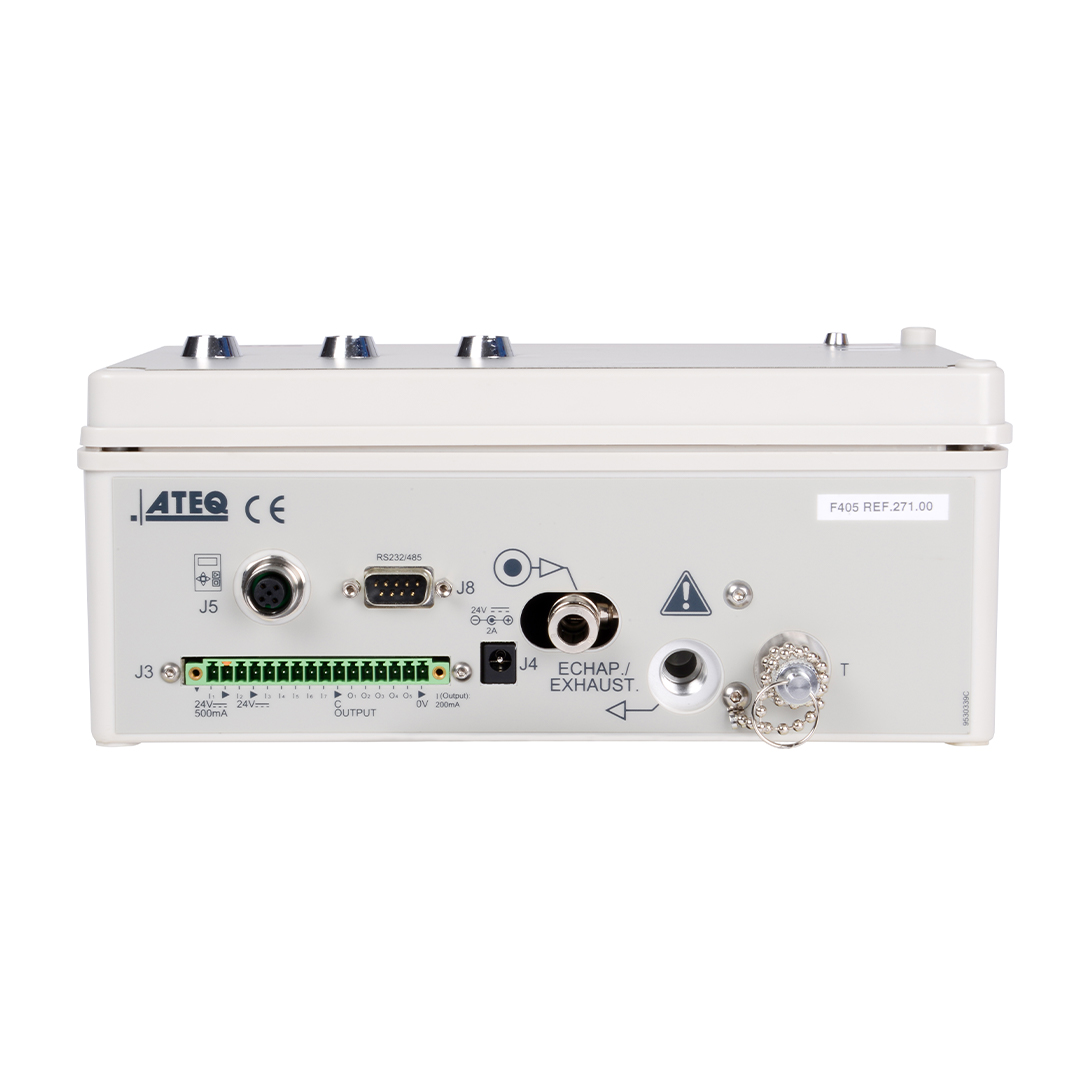
  • Test environment: The environment in which leak testing is conducted affects your test results. Our F610 equipped with a water-proof case is an excellent solution to withstand external influential factors.
  • Space: The availability of space in your testing facility or production line is another influential factor in choosing the right leak tester
Are there regulatory requirements or industry standards that govern air leak testing procedures for products? What is the standard for leak tests?2025-02-03T10:29:58+00:00

Many regulatory requirements govern air leak testing procedures. A few of the standards are below

ASTM E2930 – 13(2021): Standard Practice for Pressure Decay Leak Test Method

ISO 20486:2017 – Non-destructive Leak testing – Calibration of reference leaks for gases

ISO 27895:2009 – Standard Practice for leak testing of valves in a vacuum system

ISO 20485:2017 – Non-destructive Leak testing — Tracer gas method

ASTM F2338-09 – Standard Test Method for Non-destructive Detection of Leaks in Packages by Vacuum Decay Method

ATEQ products adhere to international leak testing standards. Refer to our certificates and accreditations or contact us to know more.

Can air leak testing be automated?2025-02-03T10:30:53+00:00

Absolutely! Air leak testing can be semi-automated or fully automated and integrated into your existing production line for improved efficiency and accuracy.

It reduces your factory operational costs, provides real-time feedback on parts tested, and permits multiple product testing with the multi-channel option.

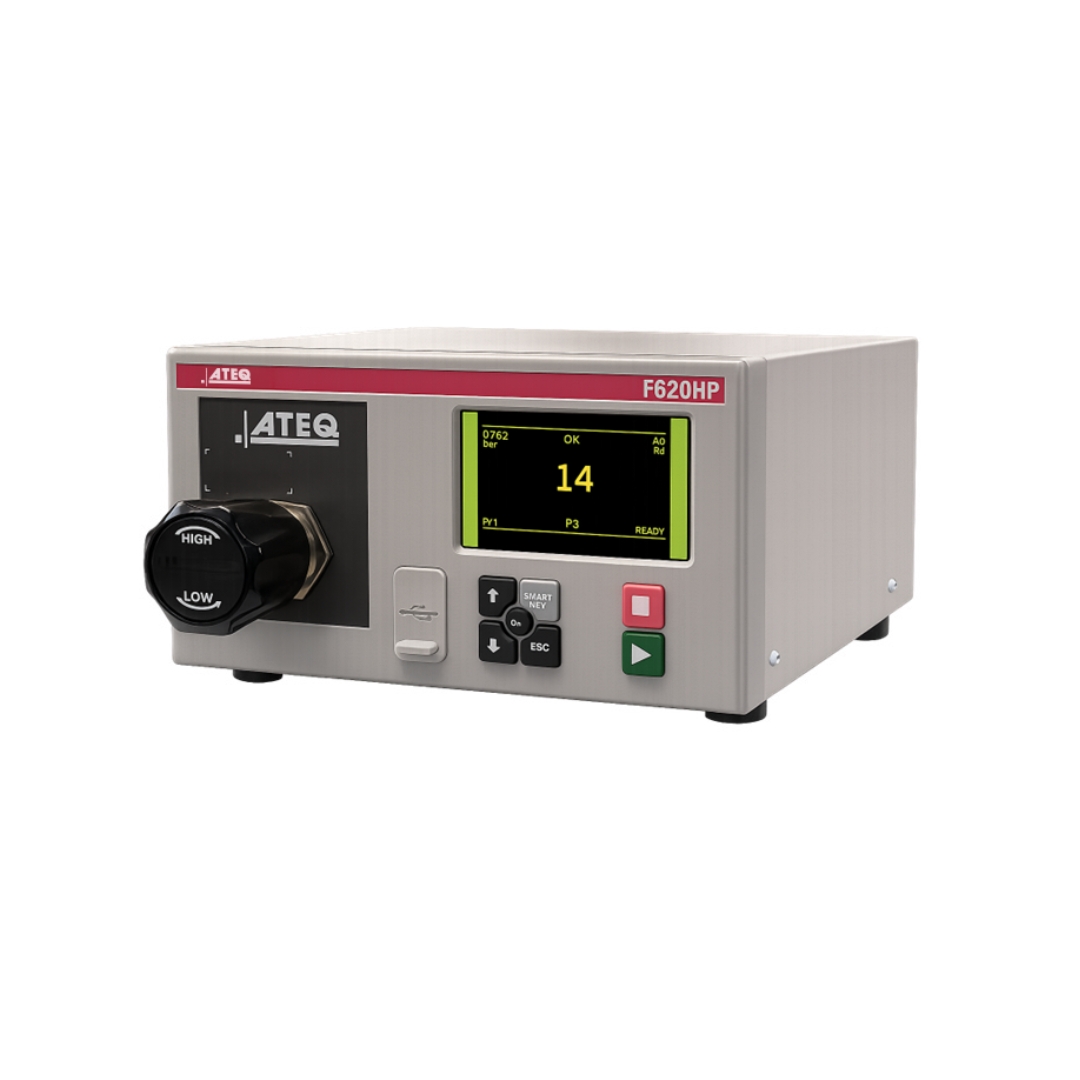
Check out our F620 or F6900 which permit single or multi-channel automated leak testing and can be easily integrated with your PLCs for automation, data collection, and analysis. Talk to our experts to know more about how leak testing can be automated in your organization.

How does air leak testing work?2025-02-03T10:32:43+00:00

Air leak testing is conducted by applying pressure or vacuum to a test part, vessel, or system and monitoring it for any presence of leaks in the system. The test object undergoes the following testing procedure:

  • Fill / Vacuum time: The test part is sealed and connected to the test equipment. Depending on the test method, the test part is filled with air or gas or vacuumed according to production specifications.
  • Stabilization Period: After reaching the set pressure or vacuum level, the system enters a stabilization phase to ensure that there are no temperature or pressure fluctuations within the system that can influence the results.
  • Test Period: During this testing period, the test piece is monitored for any pressure changes in the system. Various types of leak testing principles can be followed here depending on the test accuracy. Test results are displayed on the equipment indicating if the product has a leak within acceptable levels or not. Also, the results can be transferred to your PC (monitoring system) via communication protocols.
  • Venting: The test air is vented out to the atmosphere and the circuit is open. The test part returns to initial pressure conditions and prepares for the next test.
Why is air leak testing important ?2025-02-03T10:33:41+00:00

It is essential to acknowledge that every object in this world has some degree of leakage, but the key factor is whether it remains within acceptable limits. 

Leak testing is crucial because

  • Safety: Ensures that it detects and prevents hazardous gas leaks or entry of contaminants into your test piece or system.
  • Quality Control: To ensure that your test part is meeting the quality standards and regulatory requirements.
  • Environmental Protection: To ensure that your test piece is leakproof and does not pollute or contaminate the surrounding environment.
  • Improved product lifespan: To improve your product lifespan by restricting entry of contaminants or restricting wear and tear and damage due to continuous leaks.
What is leak testing?2025-02-03T10:34:49+00:00

Leak testing is a test method that is used to confirm the test piece’s tightness or to detect the location of a leak.

A leak can be defined as an unintended crack, hole, or porosity in an enclosing wall or joint that is meant to contain or exclude various fluids and gases. This defect allows the escape of the enclosed medium. Leakage occurs when there is unintended flow of fluid through the walls of a vessel or sealed container. This occurs due to the pressure difference between the inside of the vessel and the external atmosphere, causing air to flow from areas of higher pressure to areas of lower pressure.

Leak testing is conducted by applying a set pressure or vacuum to your test part and using various test methods such as pressure decay, bubble testing, or tracer gas sniffing, to detect, measure, and localize any leaks. The objective of air leak testing is to ensure manufacturers that their products are manufactured with the required leak-tight specifications to ensure safe and reliable operation.

Contact ATEQ for sales information, general questions, press release information and marketing inquiries.

Go to Top