We are delighted to share with you a recent article published by H2 Mobile, highlighting ATEQ’s expertise and innovation in the field of leak testing. Entitled “Leak testing for hydrogen safety”, the article explores how our solutions help ensure the safety and efficiency of systems using hydrogen as an energy source.
Below is the article translated into English:
ATEQ: Leak testing for hydrogen safety
As a global leader in leak testing, ATEQ stands out as an essential player in the hydrogen ecosystem. The company leverages its expertise to support manufacturers in addressing a critical requirement: ensuring the safety of hydrogen-powered systems—from production to end-use.
The rise of hydrogen in mobility is setting new standards for quality control. Odorless, colorless, and highly volatile, hydrogen also has a high flammability level.
In this context, leak testing becomes a crucial step in the entire manufacturing process, especially for fuel cell vehicles. Every component—tank, distribution lines, connectors, fuel cell—must undergo rigorous testing to ensure the safety of the entire system.
Solutions tailored to every application
ATEQ has developed a comprehensive range of instruments capable of detecting hydrogen leaks with high precision. These systems are suitable for both industrial environments and laboratories, whether on production lines or during final inspection.
ATEQ’s offering centers around three main devices:
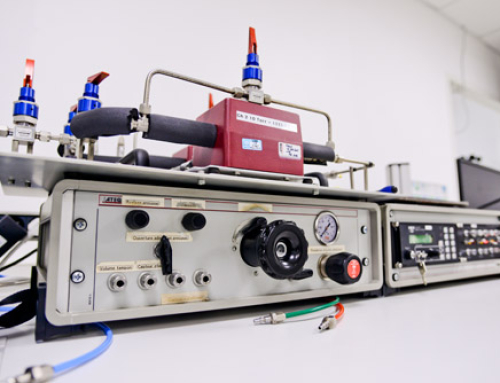
- H6000: A portable detector based on tracer gas technology, suitable for industrial environments and renowned for its efficiency in locating microleaks.
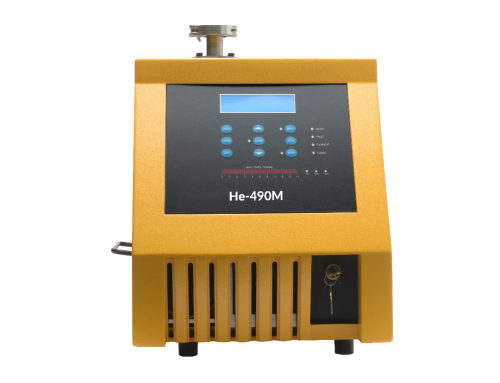
- He-490S: A helium tracer gas leak detector (sniffer) that operates using mass spectrometry, a technology that measures helium concentration to detect small leaks.
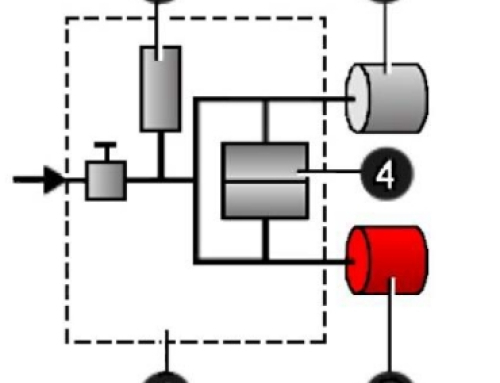
- F620: A differential pressure detector, designed for highly accurate tests that are independent of ambient conditions.
These instruments are used to test all types of sensitive components: high-pressure tanks, valves, connectors, distribution lines, fuel cells, bipolar plates, refueling equipment, and more.


Component Testing and Quality Control
In addition to individual component testing, ATEQ also intervenes at the end of the assembly line. The goal is to verify the leak-tightness of the entire vehicle after all components have been integrated. This step ensures maximum safety before the product is brought to market.
Even if each part is tested separately, it is still essential to inspect the vehicle as a whole. This helps identify potential leaks resulting from assembly or interconnections between components,” the company explains.
Comprehensive Support Across the Hydrogen Value Chain
ATEQ’s expertise extends well beyond the automotive sector. It covers the entire hydrogen value chain: electrolysis-based production, storage, transport, distribution, and more.
Through its global network, the company supports clients in a variety of sectors, including heavy mobility (trucks, trains), maritime, stationary infrastructures, and industrial installations. Its tools are designed to integrate seamlessly into production lines, offering a high degree of automation.
A Global and International Expertise Serving Industry
ATEQ Group, the global leader in leak testing, has further strengthened its international expertise with the acquisition of American company VIC Leak Detection. This acquisition enables ATEQ to integrate advanced helium detection technologies such as mass spectrometry. It broadens ATEQ’s offering to meet the demands of highly specialized sectors. With a presence in over 40 countries, the group reinforces its position as a global benchmark.
In addition, ATEQ’s technical expertise supports the sharing of various tools aimed at engineers, quality managers, and technicians. Three resources are available: a leak calculator, a technical glossary, and white papers authored by experts.
Thanks again to H2 Mobile, you can find the article in French here : ATEQ : des tests d’étanchéité au service de la sécurité hydrogène